After disrupting mathematics and computer science, the AI revolution has set its sights on medicine. AI companies are spending billions of dollars to transform biology and drug discovery. This gives hope to ME/CFS patients that the decade-long timeline to develop new medications may no longer apply in the future. This article explores recent progress in AI models and how it could be used to speed up ME/CFS research.

Unless you have a background in coding or math, you’re likely underestimating the power of artificial intelligence (AI).
When ChatGPT was released in November 2022, it was an impressive language model that could write verses in the style of Shakespeare, but it had little practical use. It would hallucinate and make logical mistakes, such as miscounting the number of ‘r’s in ‘strawberry’. The idea that these models could reason was viewed as a fallacy. They were mere statistical models, or ‘stochastic parrots’ that predict the next words without understanding their meaning.
Things have changed a lot since then. AI models have now solved some of the hardest mathematical problems that were expected to remain unsolved for decades. They have created new insights that eluded the greatest minds of our generation. And they have produced these mathematical proofs with such ease and speed that the entire field is in shambles. PhD students and professors fear that their expertise and talent have become obsolete.
Something similar happened in computer programming. AI models have become so good at coding that they surpass almost any human. The job has changed dramatically over the last few months. Many professionals no longer write code themselves but tell AI what to do. Last year, the term ‘vibe coding’ was coined to describe this approach. What started as a fun and silly experience is now becoming the industry standard. At the biggest companies in the world, such as Google, AI is writing most of the code.
This is generating a positive feedback loop in which AI writes code to create even better AI. The rapid progress is about to disrupt many other industries, including science and medicine. According to an estimate by the Brooking Institute, investments in AI infrastructure could reach $ 10.3 trillion from 2025 to 2032, or an average of 3.63% of US GDP per year. Relative to the size of the economy, that would make it the largest infrastructure investment in American history, surpassing the railroads, electrification, and the internet.
Looking beyond the slop
We suspect that this message hasn’t really gotten through to most people for several reasons.
- First, there’s so much hype and overstatement about AI that it’s difficult to look beyond the slop. Most people encounter AI through fake images (that often share the same inauthentic style) or bullshit-text from spammers and crypto-bros. This has created an understandable aversion to the technology.
- Second, people might have tried using an AI model in the past and never updated their assessment. An AI from a couple of months ago is a different beast from what is available now. Much of the old criticism of AI no longer applies to current models.
- Third, most people only use AI superficially, for example, to create an image or do a quick internet search using one of the free versions. The top-tier models are much more powerful and excel at complex tasks when given background information and access to documents. Running multiple AI agents in concert gives very different results from using ChatGPT as a quick alternative to Google search.
- Fourth, there are big commercial interests at play. Companies such as OpenAI and Anthropic have a financial incentive to make AI look powerful and disruptive. This has made people distrustful of claims about what this technology can do. When a new breakthrough or the risks of AI are discussed in the media, it’s assumed to be a marketing ploy to inflate the hype.
AI companies probably aren’t interested in doing math for the sake of it. They are trying to solve Millennium Prize Problems to showcase the power of their models and attract more investment. But that doesn’t change the fact that some of their findings are truly astonishing.
Move 37
It’s no coincidence that AI excels at math and coding: both are closed systems. They are defined by rules and conventions and don’t require external knowledge of the physical world. An AI can check whether a proposed solution is correct against prespecified definitions, and this allows it to make rapid progress.
It might take a while, but AI will probably extend its disruptive power to many other fields. It is therefore fascinating to listen to the experiences of experts in mathematics and computer programming. They are the canary in the coal mine for what is going to happen to the rest of the world.
Often, there’s a dramatic moment when experts realize the machine is truly creative and much smarter than them. One of the first times this occurred was in 2016 in South Korea. Before ChatGPT made AIs world-famous, they were making progress by solving games. Games are excellent training grounds because they have a clear set of rules that AI can try to master. Researchers at DeepMind, led by Demis Hassabis, created models that can beat humans at numerous board and computer games. One of the most complex ones is Go, a board game played with black and white stones that relies on intuition and tactical insight. It has far more possible moves than chess, making it impossible for a machine to calculate them all.
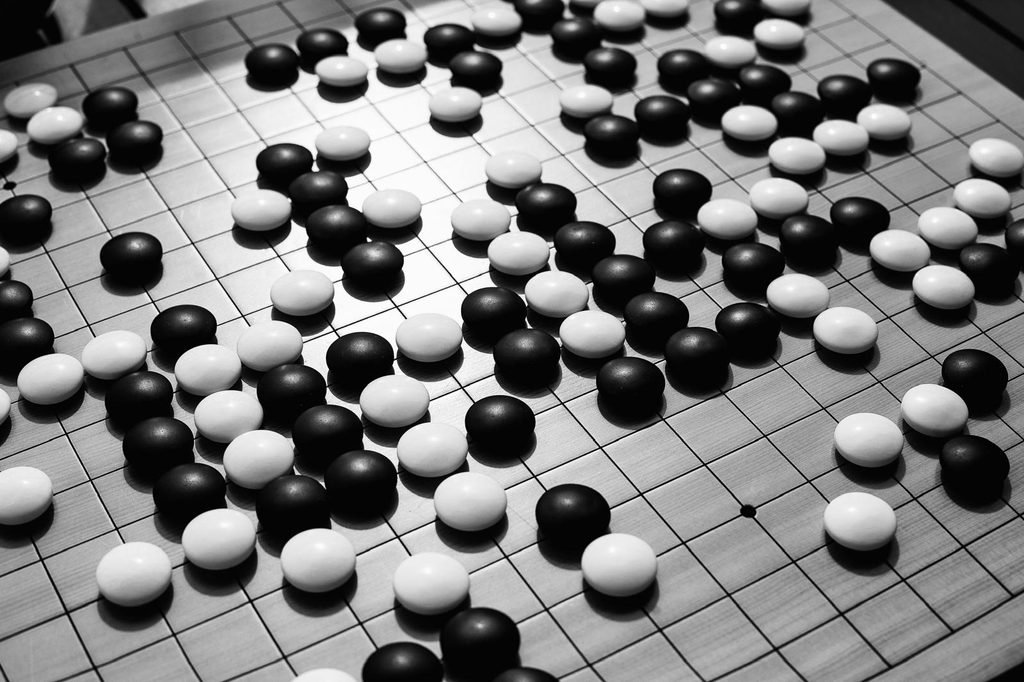
In March 2016, an AI program called AlphaGo played a match against the world’s best Go player, Lee Sedol. In the second game, AlphaGo made a “very strange move” that made commentators pause and laugh because it looked like a blunder. Move 37, however, was no mistake. It was a brilliant play that helped AlphaGo win the match. No human player would have played it. Lee Sedol was perplexed and later said about it:
“I thought AlphaGo was based on probability calculation and that it was merely a machine. But when I saw this move, I changed my mind. Surely, AlphaGo is creative.”
Many other fields will have their own Move 37 moment in the coming years. Here, for example, is what Cornell professor Steven Strogatz said about one of the recent math breakthroughs:
“A f*cking machine solved the unit distance conjecture of Erdős. […] It’s solved by AI. OpenAI, somebody in there, sets their machine to working on these great Erdős problems and it solves it in a way that is very beautiful, absolutely elegant, very imaginative, an aesthetic high point. All of us are agog because this is so clever and we can learn from it. This is important. It’s not opaque. We can follow what it did. It took a certain part of math, you don’t need to know what I mean by this, but it’s called discrete geometry. And then it took a different part of math called number theory. Two parts that hadn’t talked to each other much in the past and found that if you put them in conversation with each other, that was like the magic key. No one thought of making that connection before.”
This is a fascinating quote because you can hear both admiration and anguish about what the model achieved. Strogatz struggled to hold back tears as he explained to the New York Times what these breakthroughs meant for his beloved field of mathematics. Terence Tao, one of the leading mathematicians of our time, called it “the end of the romantic era of mathematics, the age of heroes.”
In computer science, Prof. Donald Knuth – “father of the analysis of algorithms” -published a brief paper which starts as follows:
“Shock! Shock! I learned yesterday that an open problem I’d been working on for several weeks had just been solved by Claude Opus 4.6…”
Andrej Karpathy, one of the OpenAI founders and the person who coined the term ‘vibe coding’, wrote in December 2025 that even experienced programmers feel that they are becoming obsolete.
“I’ve never felt this much behind as a programmer. The profession is being dramatically refactored as the bits contributed by the programmer are increasingly sparse and between. […] Clearly some powerful alien tool was handed around except it comes with no manual and everyone has to figure out how to hold it and operate it, while the resulting magnitude 9 earthquake is rocking the profession.”

Solving all disease
Solving math and coding problems is impressive, but few people grasp its significance. AI companies are therefore pursuing an even more ambitious goal, one that would prove to the world at large what their invention is capable of: curing diseases.
Dario Amodei, the CEO of Anthropic, thinks that AI will accelerate the pace of biomedical discoveries tenfold. In his 2024 essay “Machines of Loving Grace”, he stated:
“my basic prediction is that AI-enabled biology and medicine will allow us to compress the progress that human biologists would have achieved over the next 50-100 years into 5-10 years. I’ll refer to this as the “compressed 21st century”: the idea that after powerful AI is developed, we will in a few years make all the progress in biology and medicine that we would have made in the whole 21st century.”
He is far from the only one with this (incredible) belief. Demis Hassabis founded Isomorphic Labs, an AI company with the ambitious goal of “solving all diseases.” Hassabis won the Nobel Prize in Chemistry in 2024 for developing AlphaFold2. This AI model accurately predicts the 3-dimensional structure of proteins from their 1-dimensional amino acid sequence. This was a major scientific breakthrough. Knowing how proteins fold is crucial to understanding how they will bind and interact with other molecules. Hassabis’ team wants to use the same approach to improve drug design. Isomorphic Labs secured $2.1 billion in funding to scale its AI drug design engine. The main idea is that the time and funding needed to develop drugs could be cut dramatically if AI models can accurately predict how they will work and what effect they will have in the human body. During an interview with CBS, Hassabis said:
“So, on average, it takes, you know, ten years and billions of dollars to design just one drug. We can maybe reduce that from years to maybe months or maybe even weeks. Which sounds incredible today, but that’s also what people used to think about protein structures. And it would revolutionise human health, and I think one day maybe we can cure all diseases with the help of AI.”
Other AI companies are taking a similar approach. Anthropic began drug discovery efforts of its own and formed partnerships with six organizations that are developing new medicines. OpenAI released GPT‑Rosalind, a frontier model built to support research across biology and medicine. They are collaborating with pharma companies such as Amgen, Moderna, and Novo Nordisk to accelerate drug discovery.
It’s easy to be cynical about these initiatives, but at least the greatest minds of our generation are now working on solving disease instead of designing credit default swaps or advertising algorithms for social media.

Why it matters to ME/CFS
Progress in medicine will likely not be as fast as in coding or math. Biology is not a closed system: whatever an AI predicts still has to be tested in the lab and in patients. We have also been experimenting with AlphaGenome, DeepMind’s AI that predicts how genetic changes affect molecular biology. While it’s useful for understanding results from studies like DecodeME, it’s also clear that there is still a long way to go to fully understanding the human genome.
In the age of AI, however, things can move surprisingly fast, and these changes will have important consequences for the ME/CFS community.
- First, these investments should give severe ME/CFS patients hope. The long timeline for new drug discovery may no longer apply in the future. A common (and rather pessimistic) argument in discussions has been that even if ME/CFS research had a breakthrough finding, it would still take a decade for new drugs to come on the market. There’s a reasonable chance that AI models will dramatically shorten that timeline. In the nearer future, they will help identify already-approved drugs that may be relevant to ME/CFS.
- Second, ME/CFS scientists should embrace this technology in a responsible manner. Today, AI can speed up many tasks that make scientific research expensive, such as idea generation, statistical analysis, and drafting manuscripts and protocols. AI is probably better than many peer reviewers at spotting several errors in papers and code. Many AI companies offer free programs and credits to scientists so that they can use frontier AI models in their research without cost.
- Third, the direction ME/CFS research takes should adapt to the advances in AI. Idea generation, statistical analysis, and interpreting results will become cheap and easy due to AI progress. The biggest obstacle to progress will be collecting reliable data such as brain samples or genomic data. Funders and charities should help guide research in that direction.
None of this is meant to overlook the many problems and dangers of AI. These include a large environmental impact, cybersecurity risks, the potential loss of jobs and meaning, and even the existential risk of human extinction. AI will likely have a profound impact on our society and turn many things upside down, with both positive and negative consequences. ME/CFS patients, however, are among the wretched of the earth, and they have the most to gain from an AI revolution.